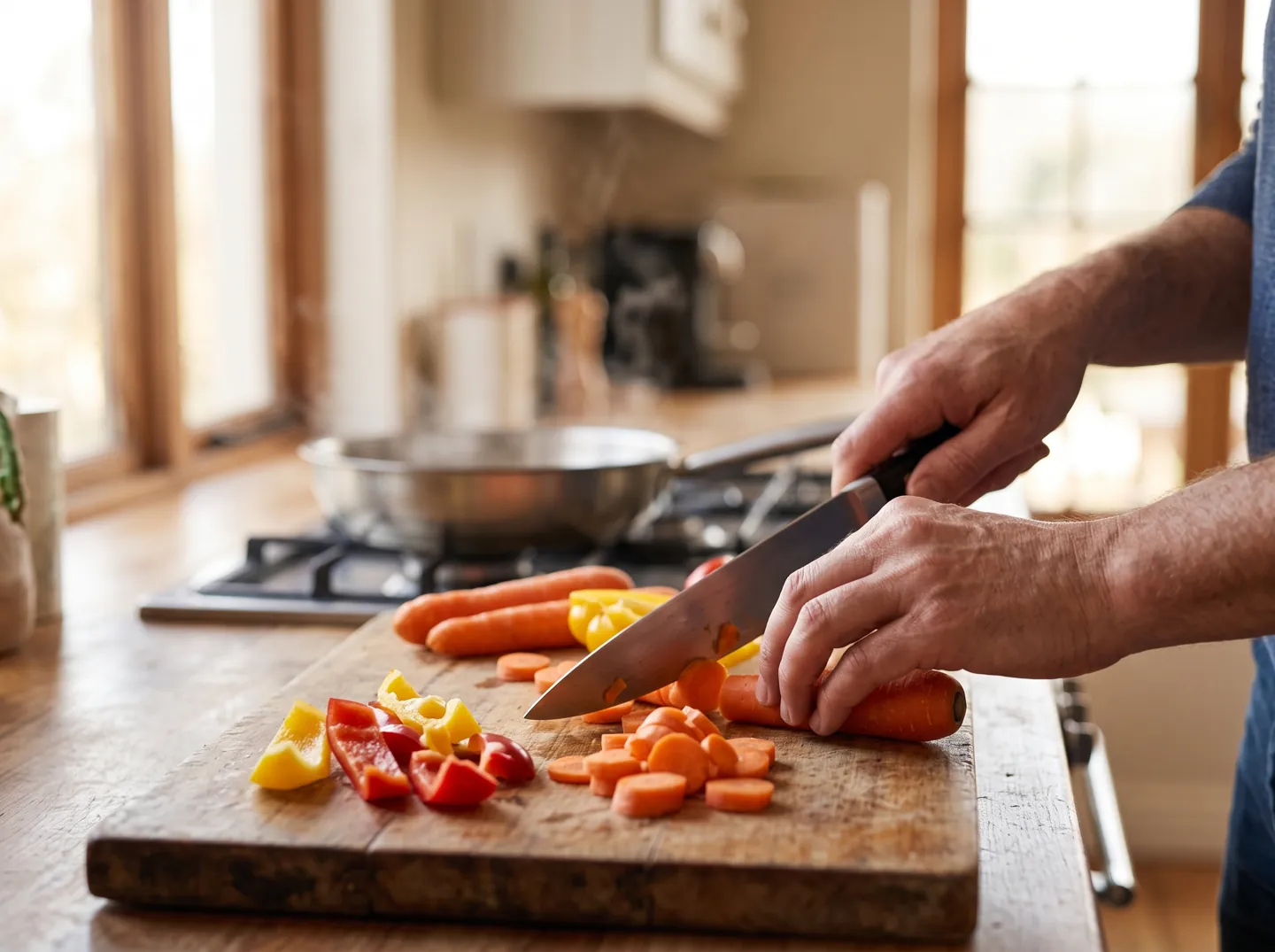
Cooking, laundry, cleaning and care fill a large part of every week.
Official statistics count this work as unpaid household service work: things a household does for itself that it could pay someone else to do. Time-use diaries show how many hours it takes, and who tends to do it.
A 2019 study of 35 couples who were parents found women more often did the anticipating and monitoring of household tasks, even for tasks assigned to men.
Pick a group to see the average weekly hours of unpaid work that ONS found in 2015 time-use data. Unpaid work here covers cooking, housework, laundry, childcare, adult care, transport and volunteering.
Averages from the 2015 UK time-use survey, as published by ONS in November 2016. Your own week will differ.
TWO NUMBERS WORTH KNOWING
What it is worth, and how the gap moves.
One figure from the national accounts, one from the latest time-use survey.
£1.24 trillion
Value of unpaid household service work, 2016
Equivalent to 63.1% of GDP and larger than the UK's non-financial corporation sector. Between 2005 and 2016 its value per head grew by 67%, against 31% for GDP per head.
HOUSEHOLD SATELLITE ACCOUNT · ONS 2018
54 minutes
Extra unpaid work per day, women vs men
In late September 2023 women averaged 3 hours 37 minutes a day of unpaid work, men 2 hours 43 minutes. The gap was 1 hour 12 minutes in autumn 2020.
TIME USE IN THE UK · ONS 2023
Unpaid work here means services a household could pay someone else to do, such as cooking, cleaning, laundry, care, transport, DIY, gardening and volunteering (ONS definition).
FOUR WAYS TO SHARE THE LOAD
A fairer week, one task at a time.
These ideas come from how the research describes household work: it takes time, and it takes planning. Neither shows up unless you look for it.
Write down every task
List the weekly jobs, including the ones that are easy to forget: driving people about, care for a relative, and the shopping list itself. ONS counts all of these as unpaid work.
Guess the hours, then check
Note roughly how long each task takes in a week, so the list shows time as well as jobs. The research above is built on the same idea: counting hours, not just tasks.
Hand over the whole task
Give each task one owner from start to finish, including noticing when it needs doing and checking it got done. That covers the anticipate and monitor steps the 2019 study found women did more often.
Review it after a month
Weeks change with new jobs, school terms or someone needing care. A short check-in keeps the list honest.
AI-generated image, not a photograph of a real person or place.AI-generated image, not a photograph of a real person or place.
WHY IT IS COUNTED
Not in GDP, but still work.
By international convention, GDP leaves out services households produce for themselves. ONS uses a separate household satellite account to put a value on them, using a simple test: could the household have paid someone else to do it?
Care is a big part of the picture. ONS estimated unpaid childcare in 2015 at £132.4 billion, with 69% of that value provided by women, and found mothers still provided 74% of total childcare time even though their daily childcare time had fallen slightly since 2000.
Questions
Questions people ask
What counts as unpaid work?
ONS defines it as service work households do for themselves that they could pay someone else to do, such as childcare, adult care, cooking, laundry, transport, housework, DIY, gardening and volunteering.
How many hours of unpaid work do people do?
In 2015 time-use data, men averaged 16 hours a week and women 26 hours. In late September 2023, women averaged 3 hours 37 minutes a day and men 2 hours 43 minutes.
How much is unpaid household work worth?
ONS estimated the value of the UK's unpaid household service work at £1.24 trillion in 2016, equivalent to 63.1% of GDP.
Is the gap between men and women getting smaller?
In ONS time-use data the daily gap fell from 1 hour 12 minutes in autumn 2020 to 1 hour 4 minutes in November 2022 and 54 minutes in late September 2023.
What is the mental load of housework?
It is the thinking behind tasks. A 2019 study split it into anticipate, identify, decide and monitor, and found women more often anticipated and monitored, while decisions were made roughly equally.